Showing posts with label Games. Show all posts

Saturday, August 6, 2011

Life, Gaming, and the Gospel: Dungeons and Dragons, part 3

Click on the links to read Part one and Part Two of a series of articles about Dungeons and Dragons.

So, I've just been thinking a bit lately about Dungeons and Dragons.  A guy has to think about something, after all, and I've had a lot of practice thinking about D&D.  (I first got started in a library near my house when I saw a copy of the Dungeon Master's Guide on a shelf and figured, why not?  After all, I had seen some of my dad's old AD&D figurines, so I was kind of curious.)
Anyway.

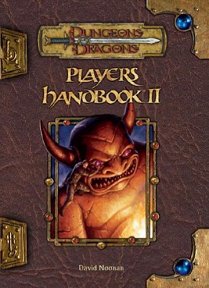
Once I got my start, I was hooked.  What were these tables of feats, dice charts, adventures, characters, options, prestige classes, sourcebooks, weapons, character traits, flaws, monsters... Oh yes, lots of monsters...  From there, I branched out at the library.  I knew from the internet that I'd need the Dungeon Master's Guide (DMG), the Players Handbook (PHB) and the Monster Manual.  I couldn't find the PHB, so I got the Player's Handbook II.  (Yes, there's a second PHB.)  Since I couldn't find the PHB anywhere, I got really frustrated.  After all, the PHB is the only book of the main three that is absolutely indispensible; everything else revolves around it, since it explains the character rules the most clearly.
 

Imagine trying to play Monopoly without the rules.  Imagine playing any game without the rules.  It would become chaos, everyone trying to get their own way, trying to get all they can grab, and with noone really being sure when they've won or not.

It kind of sounds like today, now doesn't it?  Everyone's running around like a chicken with their head cut off, trying to scratch all the money that they can out of life.  All the times, they've lost the point of life.  Just like the point of D&D is not to get rich, in-game or out, the point of life is not to get rich but to be happy.  Certainly, having enough money to get by is healthy and good, but we just need to focus on being happy.  Christ is the best way to achieve that.  I know this to be true.

Next time you need to know what to do, try reading the scriptures. They're the instructions for life.

(A Postscript: I still don't actually own any of the PHB, MM, or DMG.  They're very hard to find in the thrift stores I shopped at.  I haven't gone on Amazon yet. Maybe when I get home from my mission.)

Friday, July 29, 2011

Life, Gaming, and the Gospel: Farkle

I looked up Farkle on Wikipedia to do some research, maybe score a picture.  I wasn't expecting so much text of variants.
I was first introduced to Farkle while I was in Philadelphia about eight months ago.  I borrowed it from another Elder, Elder Brower.  I and my companion, Elder Butler, were hooked.  We'd come in from a busy day of proselyting, ready to take our two hour break around 2'o-clock.  We'd cook up some ramen, eat it, and then bust out the dice cup.

So what is Farkle?  Simply put, it's one of the many dice games out there.  You have six dice, and you're trying to be the first one to reach 10,000 points.  You do this by attempting to make certain dice combinations.  For example, '1's are worth 100 points, '5's are worth 50,  three '6's is worth 600 points, six of a kind is worth 3000 points, and you're always trying to get the best score possible.

Once you score some points, you have an option: either you can stay with the score that you have, adding it onto a running total, or you can reroll some of the dice that didn't score in hopes of getting a greater score.  If all six dice produce a score, you can continue the cycle indefinitely.  However, if none of the dice in a throw produces a score, you Farkle.  That means, however many points you had for that turn are gone.  For example, let's say you roll three '5's and two '1's for a total of 700 points.  You could either stay with that seven-hundred points, adding it onto your running total, or you could roll the last dice and hope for a '1' or a '5', to score a lot more points.

The only problem, and one that makes me shy away from most dice games, is that it's entirely luck.  If you're lucky, you win.  If you don't, you don't.  It brought out someone that I didn't know existed, someone who said, 'You've got three thousand points on the line.  You're really lucky.  Go ahead, roll that die.  You'll win.'
And then, I'd lose.  I just am not meant to be a gambler.

Neither is anyone else.  That's actually why God, through his prophets, has told us to avoid gambling.  It makes us believe that we can get something for nothing, and it never works.  If you've ever gone to a casino, you'll see a whole lot of people getting cleaned out.  Nobody ever wins.

Tuesday, July 19, 2011

Life, Gaming, and the Gospel: Here's a riddle for you...

Here's a riddle for you:
"A Man pushed his Car to a Hotel and lost all his Money.  A one word answer explains it all."

And here's the answer:
Just a little poll, by the raise of hands:  who here likes Monopoly?  It's a simple enough game, really, requiring almost no interaction between people apart from taking their money.  You start at Go, a brand new businessman with $1500 burning a hole in your pocket.  Now, all that separates you from fantastic wealth or crushing defeat are the odds of the dice, and who can buy and upgrade property the most quickly.  Every time you round 'Go' again, you get $200 salary.  Any other money you get comes from the other players, when they have the bad fortune to land on your property and have to pay you rent.

Now another poll:  Who actually likes Monopoly?  As in, if you had a choice of any board game in the world, who here would choose to play Monopoly?  It really isn't that interesting, and doesn't require all that much strategy:  You roll your dice, move your little figurine, and either buy a property, pay rent, or draw a card, and upgrade whatever you can afford to upgrade.  This is repeated for about three hours, depending on the game and any additional house rules.  Usually, by the end of hour two, I'm ready to blow my brains out from boredom and frustration.

Now, who here can see a relationship between Monopoly and the Gospel?  How about between Monopoly and life?  So often, we get caught up in the rat race of going around, getting money, screwing our neighbors, that we forget why we're really here.  It gets both boring and frustrating to play like this, and after a while you realize that you're back where you started.  Sure, you might win the game, and make everyone else go out of business, but by the end neither you nor anyone else playing is really happy.

So where does somebody find happiness?  It's not in the money.  It's not in knowledge, though knowledge is good.  Rather, happiness comes from living your life according to God's commandments.  It makes you feel happy, and it helps others. 

Let's take an example:  you see a friend who needs some help.  Let's say that they're moving and need your assistance.  After you've helped them, even if they don't pay, don't you feel good?

You're playing with your kids, and your kids break something.  Which makes you happier: to shout at and beat them? or to speak gently and help them to see that what they did was wrong?

God gives us commandments because he loves us.  They aren't a restrictive ruleset made up to make us miserable.  Rather, they are to help us live happily.  That's really all God wants us to do.  Live life.  Be nice to each other.  In the words of Bobby McFerrin,
(Just a postscript:  I wish I had that song on a CD.)

(Also, a postscript:  We played monopoly with one of our investigators a few days ago.  It was actually a lot of fun, though frustrating because people would skip past my almost two sides of property, and then land on my companions one block of hotels.  Oh well.)

Saturday, July 16, 2011

Life, Gaming, and the Gospel: D&D part 2

Really, the wonderful thing about Dungeons and Dragons is that you can be whoever you what, whereever you want.  Let's say you want to be a midget who wields a hammer bigger than he is.  With the right combination of feats and weapon, you could do that.  (Playing a gnome barbarian with the feat Monkey grip, and the Gloves of Powerful build ought to do it.  Match with a Minotaur greathammer for some real fun.)

Let's say you want to be a giant who throws his enemies around.  Play a Goliath barbarian with the Martial Throw feat, and you can pull it off.

How about a ninja?  You'll never be able to be Naruto, but for a regular ninja, a Human Swordsage comes pretty darn close.  Pair it with a pair of short swords and the Two-Weapon Fighting feat for the best results.

How about something difficult?  Let's say you want to be a master of two different types of magic, and be powerful in both.  Start as a human wizard, and take the Precocious Apprentice feat.  Next, take three levels of Druid.  At that point, you can join the prestige class Arcane Heirophant, which will allow you to progress in both classes at the same time.  Finish off with three levels of Mystic Theurge, and you have full spell-casting abilities in both classes.

Like I said in my previous post, you can be whatever you want, except possibly Naruto or Superman.  So long as you work within the rules, there's a way to achieve what you want. 

It's the same way with life.  God has given us the greatest gift possible:  life itself.  With that gift, he's also given us the ability to choose for ourselves what we want to be.  We choose that by what we desire.  If I want to be a good person, I will.  If I remember correctly, Andrew Carnegie said "It's no great trick to be rich, if what you want is to be rich."

So long as we want eternal life, we will eventually bend that way.  It requires much, but if we want it more than anything else, there is nothing that can stop us.

For a really good talk about choise, read The Three R's of Choice.  I love it.

Friday, July 15, 2011

Life, Gaming, and the Gospel: D&D

In case any of you didn't know this, I am an avid gamer geek.  It says so right in my Mormon.org profile.  If you name a game, I've probably seen, heard about, or played it.  I've noticed, once in a while, that random stuff often has parts of the gospel in it.  Today, I'm going to talk about one of my favorite games, Dungeons and Dragons.

Now, don't run away.  Don't worry, I'm not a total geek.  Now, let's see what YouTube pulls up when we type in Dungeons and Dragons. 

No, that little clip to the right is not what Dungeons and Dragons is.  It's the results of people trying to cash in on what it really is.
Nor is the clip to the left a full representation of D&D, though it is somewhat more accurate.  (For one thing, I've never gamed with candles, dressed up, or spoken in funny voices.
Basically, Dungeons and Dragons is a fun game where you play as a character in a fantasy medieval world.  You create a character, and for the length of the game, that is you.  Put it this way; World of Warcraft is a downgraded, online game that was inspired by D&D.

D&D is all about choice.  Let's start with your character.  You have many options, but we're going to start with This will all sound a bit complicated, especially if you've never played the game, but it makes sense after a while.  First, you pick a race, something like Elf, Halfling, Human, Dwarf, or another.  In the basic set of rules, you have a choice of seven races, each with their advantages and disadvantages.

Then, you choose a class, which is something like a profession; you could be a wizard or a rogue, a barbarian or a ranger, a paladin or a sorcerer, and so on.  Depending on which class you choose, you'll be able to do different things.  (For example, rogues are able to deal extra damage when catching people unawares, clerics are able to heal people, and wizards are able to cast a great variety of magic spells.)  There are eleven of these, so you have 77 choices before we even go into other options.  (For example, you could be a dwarf sorcerer, an elf paladin, a half-orc rogue, or whatever combination strikes your fancy.)

Now, let's add in the diversity of feats.  Feats are not those things attached to your legs.  Instead, they are special abilities that you get every once in a while.  Usually, they provide either a new thing that you can do, or provide some numeric bonus.  For example, "Weapon Focus" would allow you to attack better with a certain weapon, and "Forge Ring" would allow you to make magic rings.  There are literally too many feats to count.  If you don't believe me, go to this page.  Those are the feats contained in the basic book.  There are millions of possible combinations.  If you still don't believe me, go here.  It's a consolidated list of all feats in all books.

You see, all of these are options found in three books of options: the Players Handbook, the Monster manual, and the Expanded Psionic handbook.  There are more options, more classes, more feats, and each one adds more options for people.

I googled to see if anyone had figured out the total number of possible combinations in D&D.  Nobody seems to have invested that much time.

Just think:  there are these many combinations in a game.  In life, we all have many more options available to us.  It's all about choice.  We can choose who we want to be, how to get there, and what we will do.  I know that as we go and follow Jesus Christ, we can all come to God again. 

What will you choose?